Curiosity Blog, Sols 4982–4987: Back to Our Regularly Scheduled Programming
By Allison Dries-Padilla, Missions Operations Specialist at Malin Space Science Systems
Earth planning date: Friday, Aug. 14, 2026
This week's operations for the Curiosity Mars rover are returning to its primary mission objective: ascending Mount Sharp. After a brief exploration of an intriguing erosional surface, the rover is back on track. As Gale Crater approaches autumn, the atmospheric conditions become more favorable with decreased temperatures and a lower probability of dust storms, though Curiosity remains vigilant for any late-season local and regional dust events.
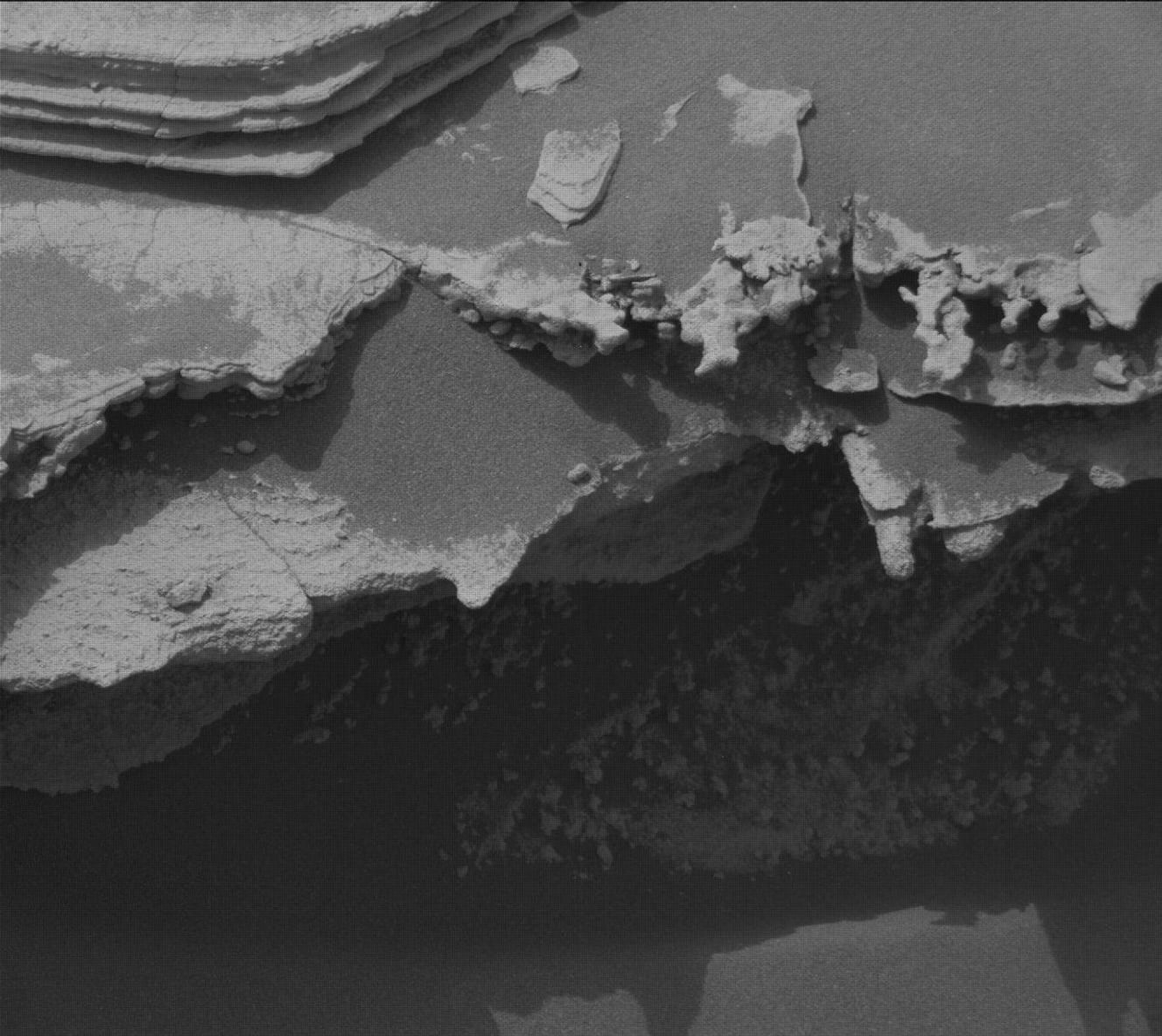
The plan for Sols 4982 to 4985 commenced with Curiosity positioned before a distinctive geological formation situated just above the erosional surface contact. As noted in the previous blog post, the team dedicated two planning cycles to thoroughly examine this remarkable site. The MAHLI instrument captured updated images for a mosaic of the target "Tres Morros," providing the science team with a detailed view of the underside of this feature. Additionally, APXS conducted measurements on the bedrock target "El Motacusal" after it was prepared with the Dust Removal Tool (DRT). A second APXS measurement was taken on the "as is" bedrock target "Alto de Carmen." Both of these APXS targets were documented with high-resolution MAHLI images. ChemCam's activities included LIBS spectroscopy on bedrock targets "Lagunas Bravas" and "Parququcha," along with ChemCam Remote Micro-Imaging on Mishe Mokwa. During the Mastcam uplink shift for this plan, the camera acquired a near-field mosaic of the erosional ridge, named "Los Toldos," and another mosaic of a more distant bedrock exposure above the erosional surface, designated "Los Ladrillos." Mastcam also provided color documentation for previous ChemCam Remote Micro-Imaging on Cordillera and the current plan's ChemCam LIBS activities.
Following this, Curiosity traversed approximately 100 feet (30 meters) to reach its location for Friday's plan, covering Sols 4985 to 4987. Although the new site presented ample flat bedrock suitable for analysis, the rover's positioning—with its left-front wheel resting on a small rock—posed a constraint. This precarious stance necessitated careful consideration to avoid any risk of slippage when maneuvering the robotic arm. Despite this, MAHLI and APXS were still able to safely conduct contact science on two bedrock targets: "Mamorecillo" and "Aguas Claras." MAHLI also performed an additional housekeeping task by imaging the calibration target. ChemCam is scheduled to use its laser spectrometer for geochemistry analysis on three targets in the vicinity, followed by Mastcam documentation. Today's ChemCam LIBS targets include a dark, resistant layer in the bedrock named "Yura Kasa." Mastcam is planning a series of mosaics to continue documenting the stratigraphy of the unit above the erosional contact.
Today's operational plan was extensive, incorporating numerous environmental monitoring activities to detect dust storms. Mastcam captured a series of images to measure the atmospheric optical depth, or "tau," with higher tau values indicating increased dust concentration. APXS contributed by planning an overnight atmospheric measurement. Navcam was instrumental in dust storm monitoring, conducting multiple dust-devil surveys, zenith observations, in-crater line-of-sight observations, and suprahorizon cloud movies.
Curiosity will continue its ascent of Mount Sharp. The planned drive of 150 feet (47 meters) will move the rover southwest of its current position. Operations will resume on Monday with a new week of contact science, remote sensing, and driving on Mars.
Fresh materials — MMA News

Ribbon-Cutting Ceremony for NASA's Deep Space Station 23
NASA/JPL-Caltech NASA Headquarters, Jet Propulsion Laboratory (JPL), and the Deep Space Network (DSN) leadership recently convened for a ribbon-cutting event to inaugurate Deep Space Station 23 (DSS-23) at the D
MIT Team Wins NASA's LunaRecycle Challenge Phase 2 for Waste Recycling Innovation
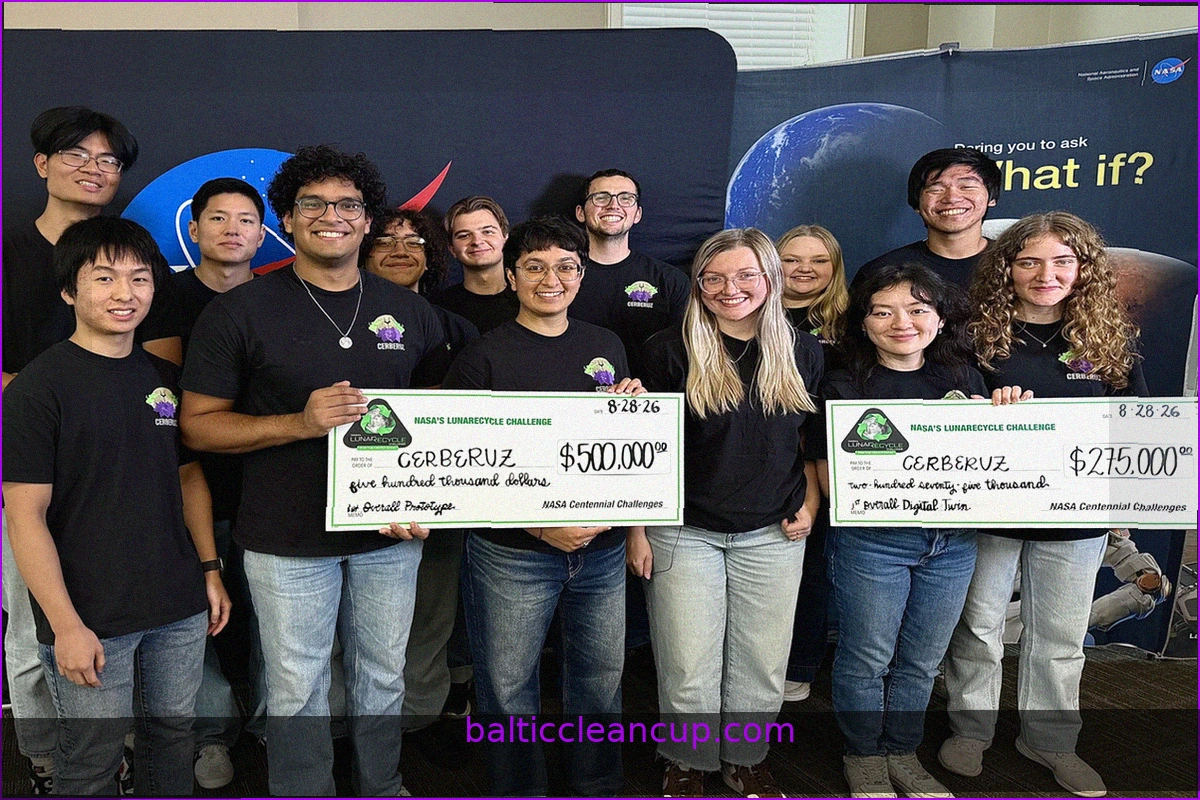
NASA has announced a team from the Massachusetts Institute of Technology (MIT) as the grand prize winner of Phase 2 of its LunaRecycle Challenge. This competition aims to develop innovative solutions for reducing waste during space missions by recycling everyday materials like fabrics

NASA Johnson Pilots Chase Moon’s Shadow for Eclipse Science
During the total solar eclipse on August 12th over Europe, scientists sought to unravel a persistent enigma: why the Sun's outer atmosphere, the corona, is significantly hotter than its visible surface. To gather the necessary data, precise timing and location were paramount. Pilots from

Building Foresight for Earth Science: Lindsey Jacobson's Role in NASA
NASA's Earth-observing satellite missions diligently track numerous planetary changes, including aerosols, sea levels, land cover, and cloud cover, over extended periods. Maintaining the integrity of this crucial data for scientific and operational users necessitates more than just engineering
NASA to Announce LunaRecycle Challenge Winners at University of Alabama
NASA is set to unveil the champions of its LunaRecycle Challenge on Friday, August 28th, at The University of Alabama (UA) Lee Styslinger College of Engineering in Tuscaloosa, Alabama. This challenge, initiated in 2024, aims to foster the creation of novel recycling systems crucial for managing
New Next-Gen Dish Boosts NASA's Deep Space Communication Capabilities
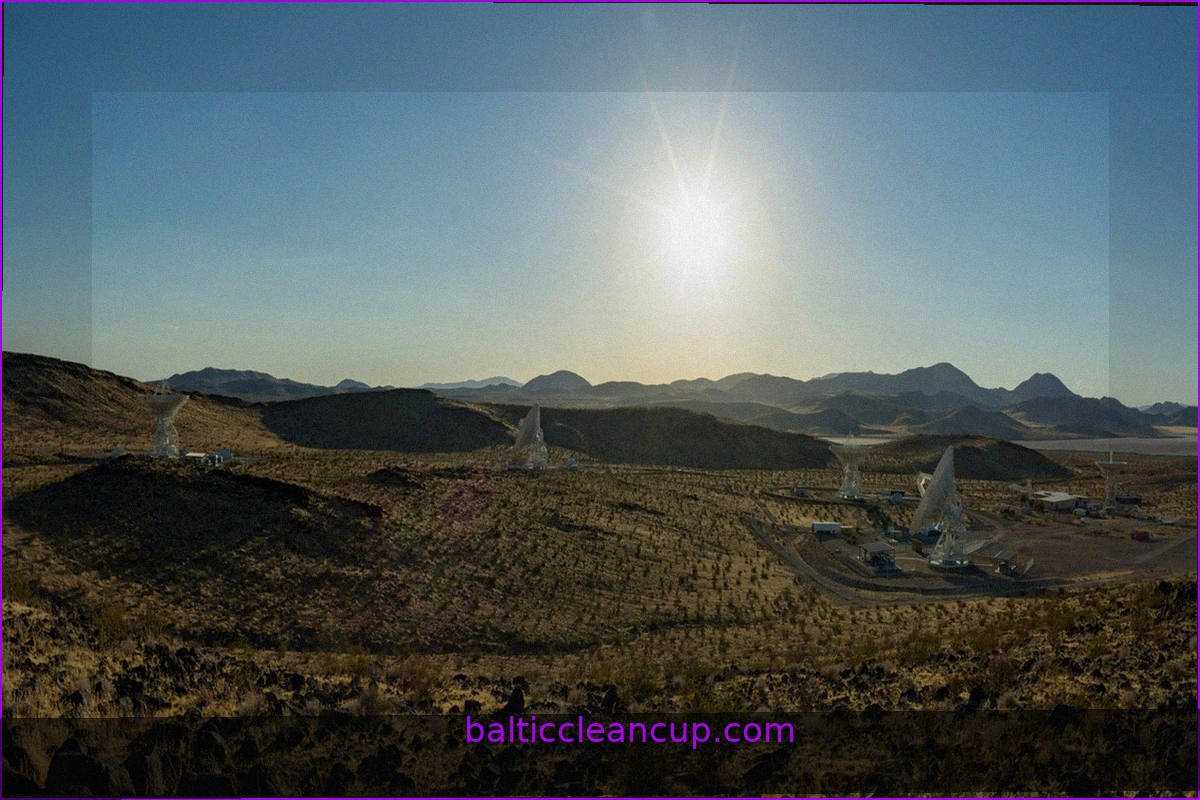
NASA has significantly enhanced its deep space communication and navigation infrastructure with the addition of a new 34-meter (114-foot) radio frequency antenna at its Goldstone facility in California. This cutting-edge dish is now part of a global network of large antennas that supports over 40